
Sending parcels internationally from Canada shouldn't feel like navigating a maze of customs forms, unpredictable costs, and carrier confusion. Whether you're a small business owner shipping products to global customers or an individual sending gifts to family abroad, understanding the complete workflow from preparation to delivery makes the difference between smooth transactions and costly mistakes. This guide breaks down every step you need to master international parcel sending, helping you avoid common pitfalls while saving time and money.
Table of Contents
- Understanding the international parcel sending challenges in Canada
- Preparing for your international parcel shipment: requirements and documentation
- Executing the international parcel sending workflow step-by-step
- Verifying shipment and troubleshooting common issues
- Streamline your international parcel sending with Shippzy
- Frequently asked questions
Key takeaways
| Point | Details |
|---|---|
| Understanding costs and customs is essential | Canadian small businesses face significant challenges including high costs and complex customs procedures that require advance planning. |
| Preparation with correct documentation avoids delays | Accurate customs forms, product details, and origin information prevent parcels from being held at borders. |
| Technology tools automate and simplify shipping | Shipping software streamlines processes by automating label creation, customs declarations, and carrier comparisons. |
| Step-by-step execution ensures reliability | Following a structured workflow from labeling through drop-off minimizes errors and speeds delivery. |
| Verification prevents costly errors | Tracking parcels and responding quickly to customs requests protects your shipment from delays or returns. |
Understanding the international parcel sending challenges in Canada
Shipping internationally introduces several pain points that catch Canadian senders off guard. Costs represent a significant operational expense, especially for small businesses trying to compete globally while maintaining profit margins. Unlike domestic shipping where prices are relatively predictable, international rates fluctuate based on destination zones, package dimensions, weight, and carrier service levels.
Canadian small businesses face significant challenges in international shipping, including high costs and complex customs procedures. Customs compliance adds another layer of complexity that many senders underestimate. Each destination country enforces unique import regulations, prohibited item lists, and documentation requirements. Missing or incorrect customs forms lead to parcels being held at borders, returned to sender, or destroyed.
The financial consequences extend beyond shipping fees. Misunderstanding regulations results in unexpected duties, fines, or complete loss of goods. A parcel returned from overseas costs you double the shipping expense plus the lost sale or disappointed recipient. Small errors like incorrectly declared values or missing harmonized system codes trigger customs holds that delay delivery by weeks.
"Understanding your destination country's import requirements before shipping saves both money and frustration. The time invested in preparation pays dividends in smoother customs clearance."
Preparation and knowledge dramatically reduce these risks. Knowing which documents you need, how to classify products, and which carriers specialize in your destination routes transforms international shipping from a gamble into a predictable process. Tools like Shippzy's platform consolidate carrier options and automate documentation, removing guesswork from the equation.
Key challenges to address include:
- High and variable shipping costs that impact profit margins
- Complex customs requirements varying by destination country
- Risk of delays from incomplete or incorrect documentation
- Potential fines or returned parcels from regulatory non-compliance
- Difficulty comparing carrier services and transit times
Preparing for your international parcel shipment: requirements and documentation
Successful international shipping begins long before you hand your package to a carrier. Proper preparation ensures your parcel clears customs smoothly and arrives intact. Start by selecting packaging sturdy enough to withstand international transit. Flimsy boxes or inadequate cushioning lead to damaged goods and insurance claims.
Your packaging choice impacts costs too. Oversized boxes increase dimensional weight charges, a pricing method where carriers bill based on package size rather than actual weight. Use appropriately sized boxes with minimal void space, filling gaps with bubble wrap or packing peanuts to prevent items from shifting.
Customs documentation represents the most critical preparation step. Every international shipment requires a customs declaration form detailing what's inside, its value, and origin. Proper documentation preparation simplifies customs clearance and reduces delays. Commercial invoices provide additional detail for business shipments, listing item descriptions, quantities, unit prices, and total value.

Accuracy matters enormously here. Declaring a lower value to reduce duties tempts some senders but constitutes fraud and risks confiscation. Conversely, overvaluing items unnecessarily inflates duties and taxes for your recipient. List exact purchase prices or fair market values.
Product classification using harmonized system codes helps customs officials quickly identify goods and apply correct duty rates. These six to ten digit codes categorize everything from electronics to textiles. While not always mandatory for small parcels, including them speeds processing.
Pro Tip: Create a standardized documentation checklist for your most common shipments. Include product descriptions, HS codes, and country of origin information you can quickly reference rather than researching each time.
Research destination country import restrictions before shipping. Prohibited items vary widely. Some countries ban certain foods, supplements, or electronics. Others restrict quantities or require special permits. The Canadian government resource provides starting points, but verify with destination country customs authorities.
| Document Type | Purpose | When Required |
|---|---|---|
| Customs Declaration | Declares contents, value, origin | Every international shipment |
| Commercial Invoice | Details transaction for business shipments | Commercial goods |
| Certificate of Origin | Proves manufacturing country | Some trade agreements |
| Export Permits | Authorizes controlled goods export | Restricted items |
| Proforma Invoice | Estimates value for samples/gifts | Non-commercial high-value items |
Gather required information before starting any shipment:
- Complete recipient address including postal code
- Your return address for failed deliveries
- Detailed product descriptions in destination language if possible
- Accurate values in destination or Canadian currency
- Country of manufacture for each item
- Harmonized system codes when available
- Recipient contact phone number for carrier notifications
Digital tools from platforms like Shippzy automate much of this documentation, pre-filling forms and suggesting HS codes based on product descriptions. This automation reduces errors while saving hours of manual form completion.
Executing the international parcel sending workflow step-by-step
Once prepared, executing your shipment follows a structured process that ensures nothing gets overlooked. This workflow applies whether you're sending one parcel or managing regular international shipments.
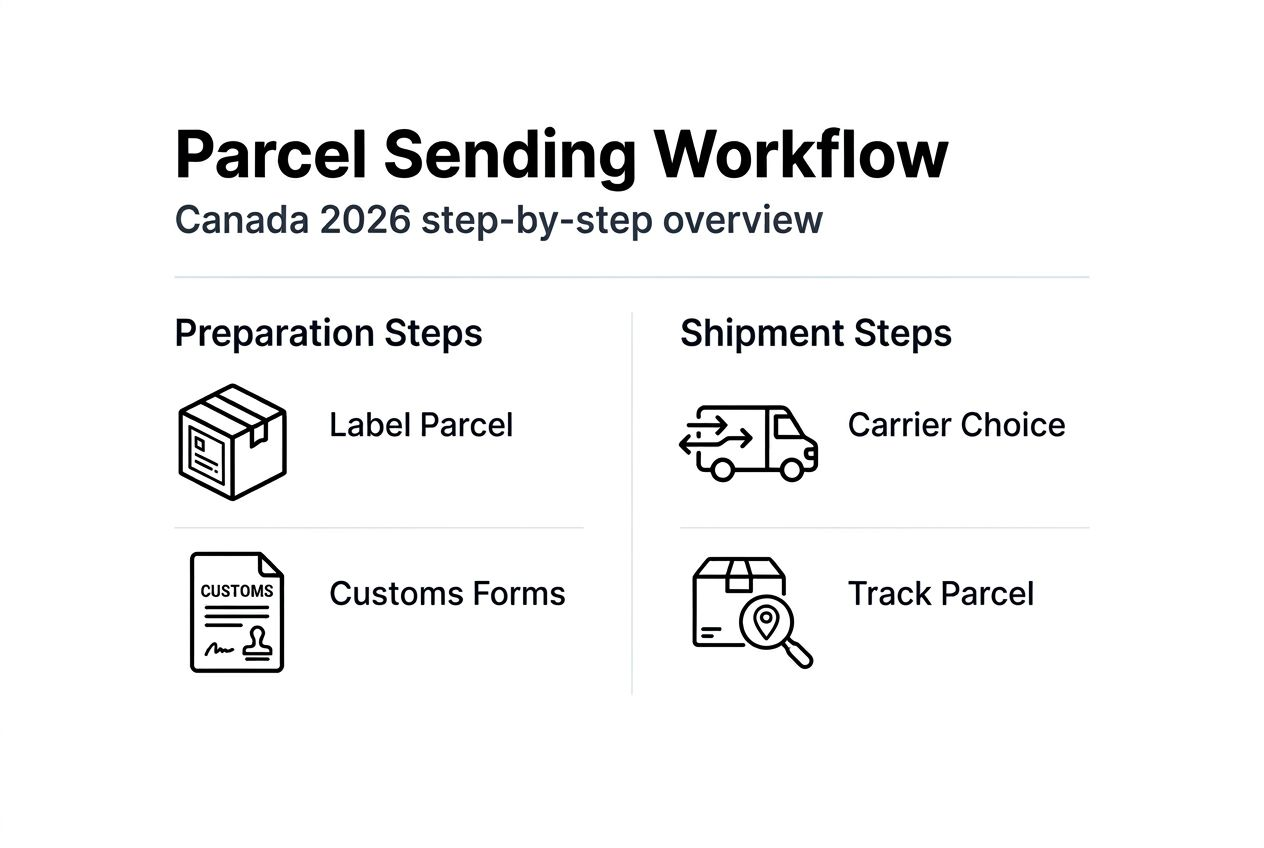
Step 1: Prepare and label your parcel with clear addressing. Write or print both shipping and return addresses legibly on the package exterior. Include recipient phone numbers for carrier contact. Affix any required customs forms securely to the outside. Remove old shipping labels that might confuse scanners.
Step 2: Select the best carrier and service level. Compare options based on your priorities. Need fastest delivery? Express services from DHL or FedEx reach most international destinations in two to five days. Working with tighter budgets? Economy services through postal networks take longer but cost significantly less. Consider insurance value limits, tracking capabilities, and destination coverage.
Shipping software automates processes and improves efficiency by letting you compare rates across multiple carriers simultaneously. This comparison reveals price differences that often exceed 40% for identical routes. Factor in dimensional weight calculations, fuel surcharges, and potential duties when comparing total delivered costs.
Step 3: Book your shipment online or directly with carriers. Most carriers offer online booking that generates shipping labels you print at home. This method often provides discounted rates versus walk-in pricing. Enter package dimensions and weight accurately, as carriers verify measurements and adjust charges for discrepancies. Schedule pickup if available or note your chosen drop-off location.
Step 4: Drop off your parcel or arrange pickup service. Carrier drop-off locations include retail stores, authorized shipping centers, and dedicated carrier facilities. Verify location hours and any size or weight restrictions. Pickup services cost extra but save time for regular shippers or heavy parcels. Confirm pickup windows and have packages ready at the specified location.
Step 5: Obtain and save shipment tracking numbers. Your tracking number is essential for monitoring progress and filing claims if issues arise. Save confirmation emails, photograph labels, and record numbers in your shipping log. Most carriers provide real-time tracking showing when parcels clear customs, reach destination countries, and go out for delivery.
Pro Tip: Photograph your packed items and sealed packages before shipping. This documentation proves contents and condition if you need to file damage or loss claims later.
| Service Type | Typical Transit Time | Best For | Average Cost Range |
|---|---|---|---|
| Express International | 2-5 business days | Urgent shipments, high-value goods | $50-$200+ |
| Standard International | 6-10 business days | Regular business shipments | $25-$80 |
| Economy International | 10-20+ business days | Low-value items, non-urgent parcels | $15-$40 |
| Freight Services | Varies by size/weight | Large or heavy shipments | Quote based |
Automating this workflow through integrated shipping platforms eliminates repetitive data entry and reduces errors. Shippzy's technology connects directly with carrier systems, automatically populating shipment details and generating compliant documentation with a few clicks. This integration is particularly valuable for businesses processing multiple daily shipments.
Verifying shipment and troubleshooting common issues
Your responsibilities don't end at drop-off. Active monitoring prevents small issues from becoming major problems. Track parcels regularly, especially during the first 48 hours and when approaching customs clearance.
Most carriers update tracking every time parcels scan at facilities or during transit. Unusual gaps in scanning activity or status messages indicating holds warrant immediate attention. Contact carriers directly through dedicated customer service lines rather than waiting for automated updates.
Customs clearance represents the highest-risk phase for delays. Parcels typically clear within 24 to 72 hours, but missing information extends this dramatically. If tracking shows "held for customs inspection" beyond three days, contact the carrier to determine what's needed. Common requests include additional documentation, clarification on declared values, or payment of duties.
Proper verification and monitoring prevent costly delays and lost packages. Respond to carrier or customs requests within hours, not days. Having digital copies of all shipping documents readily accessible speeds resolution. Some destinations require recipients to actively claim parcels and pay duties, so communicate with them about expected delivery timelines and potential charges.
Avoid these common errors that trigger delays:
- Incomplete or illegible address information
- Missing or incorrect customs declaration values
- Prohibited items not caught during preparation
- Insufficient packaging leading to damage flags
- Wrong harmonized system codes causing classification holds
- Expired or invalid commercial invoices
Keep detailed shipment records including dates, tracking numbers, contents, values, and recipient details. This log proves invaluable when filing claims or researching delivery issues. Document any communications with carriers or customs officials.
"Proactive tracking and rapid response to issues separate successful international shippers from those constantly fighting delivery problems. Treat each shipment as active until confirmed delivered."
Pro Tip: Set up tracking notifications through carrier apps or email alerts. These automated updates notify you immediately when status changes occur, letting you catch problems before recipients complain.
When problems arise despite preparation, escalate strategically. Carrier customer service representatives have limited authority but can open investigations. Request supervisor callbacks for unresolved issues. Social media channels sometimes generate faster corporate responses for stuck shipments.
For lost or damaged parcels, file claims promptly. Most carriers impose strict deadlines, often 60 to 90 days from shipping date. Provide photographs, receipts proving value, and all tracking documentation. Insurance coverage you purchased during booking determines compensation limits.
Maintaining positive relationships with carrier representatives helps when you need assistance. Regular shippers often get assigned account managers who provide dedicated support and expedited problem resolution. Consistent shipping volume also unlocks better rates and service levels.
Streamline your international parcel sending with Shippzy
Managing international shipping workflows manually consumes hours and introduces countless opportunities for costly errors. Shippzy's platform consolidates every step from this guide into a single integrated system designed specifically for Canadian individuals and small businesses.
Our technology automates customs form generation, compares rates across DHL, FedEx, UPS, and other major carriers instantly, and produces compliant shipping labels with one click. You'll eliminate hours of repetitive data entry while reducing documentation errors that cause customs delays. Integrated tracking provides real-time visibility across all your shipments from a unified dashboard.
Shippzy's partnerships with global carriers deliver discounted rates unavailable to individual shippers, often saving 20 to 40% versus walk-in pricing. Our logistics experts provide customs documentation support and clearance assistance, helping you navigate complex international regulations confidently. Whether you're shipping personal parcels to family overseas or managing regular business deliveries to global customers, our shipping technology solutions scale with your needs while maintaining the reliability and speed your recipients expect.
Frequently asked questions
What documents do I need to send a parcel internationally from Canada?
Every international shipment requires a customs declaration form detailing contents, values, and country of origin. Commercial shipments also need commercial invoices listing transaction details. Some destinations or product types require certificates of origin, export permits, or proforma invoices for samples and gifts.
How can I reduce international shipping costs for my small business?
Compare carriers using shipping software to find the best rates for each destination and service level. Use appropriately sized packaging to avoid dimensional weight surcharges. Consider economy services for non-urgent shipments. Regular shipping volume often qualifies for discounted business rates through platforms like Shippzy.
What should I do if my parcel is held up at customs?
Contact your carrier immediately to determine why customs is holding your shipment. They'll identify what additional documentation or information is needed. Respond quickly with requested details, as delays compound daily. Common holds result from missing commercial invoices, unclear product descriptions, or unpaid duties requiring recipient action.
Can I track my international shipment after drop-off?
Yes, all major carriers provide tracking numbers that monitor parcels from pickup through delivery. Tracking updates show facility scans, customs clearance, destination country arrival, and final delivery. Most carriers offer email or app notifications for status changes. Maintain your tracking number to monitor progress and troubleshoot issues.
Are there restrictions on what I can send internationally from Canada?
Yes, both Canadian export regulations and destination country import rules restrict certain items. Commonly prohibited goods include lithium batteries, alcohol, tobacco, certain foods, and hazardous materials. Restrictions vary significantly by country. Always verify both Canadian and destination regulations before shipping to avoid confiscation or fines.