
Moving your life across international borders sounds exciting until you see the first shipping quote. Many Canadians discover too late that relocating overseas involves far more than booking a flight and packing boxes. Between customs paperwork, shipping method decisions, and hidden costs, international moves quickly become overwhelming without proper guidance. This guide walks you through relocation shipping fundamentals, helping you plan a smooth, affordable move from Canada to your new home abroad.
Table of Contents
- Understanding relocation shipping: what it is and why it matters
- Planning your international move: timeline, costs, and decluttering
- Comparing shipping options: sea freight vs. air freight for Canadian relocations
- Customs support and documentation: avoiding delays and fines
- Reliable international relocation shipping with Shippzy
- Frequently asked questions
Key takeaways
| Point | Details |
|---|---|
| Relocation shipping is international moving | It involves packing, customs clearance, and delivery of personal belongings across borders. |
| Plan 8 to 12 weeks ahead | Early planning ensures proper customs paperwork and cost control. |
| Sea freight vs. air freight matters | Sea freight suits larger shipments at lower cost; air freight offers speed at premium prices. |
| Decluttering saves money | Reducing shipment volume directly lowers your moving expenses. |
| Professional customs support prevents delays | Reliable movers handle documentation to avoid fines and shipment holds. |
Understanding relocation shipping: what it is and why it matters
Relocation shipping involves transporting personal belongings across international borders while adhering to customs regulations and selecting appropriate shipping methods. Unlike domestic moves, international relocations require detailed customs declarations, import duty calculations, and compliance with destination country import laws. The process typically includes three phases: professional packing and labeling, international transport via sea or air freight, and customs clearance followed by final delivery.
Compliance with customs regulations is critical. Missing or inaccurate paperwork triggers delays, fines, or even confiscation of your belongings. Each country maintains specific import restrictions on items like food, plants, electronics, and personal care products. Understanding these rules before you pack prevents costly mistakes at the border.
You'll choose between two primary shipping methods. Sea freight offers cost effectiveness for bulky household shipments, typically taking four to eight weeks including customs processing. Air freight delivers smaller urgent shipments faster but costs significantly more per kilogram. Many international movers also provide valuable additional services including comprehensive insurance coverage, professional customs brokerage, secure packing materials, and real time shipment tracking.
Several factors impact your moving solutions budget and timeline:
- Shipment volume and weight determine base shipping costs
- Distance and destination country affect transit time and fees
- Customs complexity varies by destination regulations
- Additional services like packing, insurance, and storage add to total costs
- Seasonal demand influences availability and pricing
Pro Tip: Request itemized quotes from multiple movers to compare not just headline prices but also included services, insurance coverage limits, and customs support quality.
Planning your international move: timeline, costs, and decluttering
Successful international relocations from Canada require significant advance preparation. Cross border moves need 8 to 12 weeks of planning for customs paperwork, transport coordination, and logistics scheduling. Starting early gives you time to research destination country import regulations, gather required documentation, and secure the best shipping rates during non peak seasons.
Accurate cost estimation goes beyond the initial moving quote. Hidden fees frequently surprise relocating families, including fuel surcharges that fluctuate with oil prices, customs brokerage fees for paperwork processing, destination port handling charges, and insurance premiums based on declared shipment value. Always request a comprehensive breakdown showing every potential cost before committing to a mover.

Decluttering before moving saves hundreds as shipment weight and volume directly affect pricing. Selling, donating, or discarding items you no longer need reduces your shipment size substantially. Focus on eliminating bulky low value items like old furniture, outdated electronics, and duplicate kitchen items. Calculate replacement cost at your destination versus shipping cost for each questionable item.
Essential preparation steps include:
- Create a detailed room by room inventory with item descriptions and estimated values
- Photograph valuable items for insurance documentation
- Research destination country prohibited and restricted items lists
- Gather proof of ownership for high value electronics and jewelry
- Organize personal identification, visa paperwork, and residence permits
- Schedule professional packing services well in advance of your move date
Pro Tip: Professional packing services protect valuables during international transit and ensure correct customs labeling, preventing clearance delays and reducing damage claims.
Comparing shipping options: sea freight vs. air freight for Canadian relocations
Choosing between sea and air freight significantly impacts your relocation budget and timeline. Sea freight costs less for larger moves, usually taking four to eight weeks including customs processing. Container shipping accommodates entire households, vehicles, and bulky furniture at rates often one third to one fifth of air freight costs. Full container load gives you exclusive use of a container, while less than container load shares space with other shipments at lower cost.
Air freight suits urgent or smaller shipments but costs significantly more per kilogram. Flight transit takes days rather than weeks, making air freight ideal for essential items needed immediately at your destination. However, air freight isn't always fastest considering customs and paperwork delays that can hold shipments for days or weeks regardless of flight speed.
The cost versus speed trade off depends on your specific situation. Families moving entire households typically choose sea freight for main shipments while sending a small air freight package with immediate necessities. Solo professionals or temporary relocations often find air freight reasonable for limited belongings.
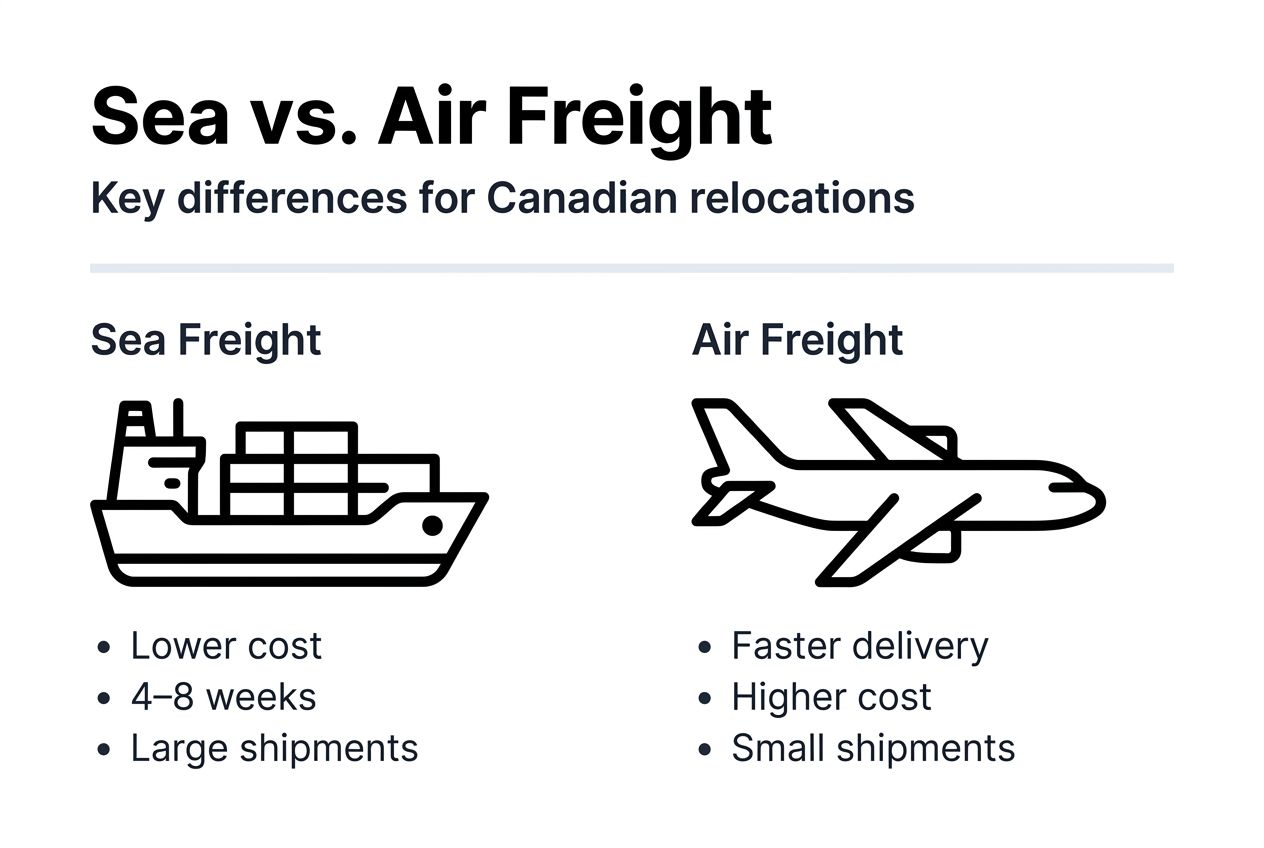
| Feature | Sea Freight | Air Freight |
|---|---|---|
| Best for | Large household moves, vehicles, furniture | Small urgent shipments, essentials |
| Transit time | 4 to 8 weeks port to port | 3 to 7 days flight time |
| Cost level | Low to moderate per kilogram | High to very high per kilogram |
| Volume capacity | Unlimited with full container | Limited by aircraft cargo space |
| Customs clearance | Standard processing timeline | Same delays despite faster flight |
| Insurance cost | Lower premiums for sea transport | Higher premiums reflect air freight value |
Pro Tip: Coordinate with shipping method providers offering customs brokerage services to minimize air freight delays, ensuring your expedited shipment clears customs quickly.
Customs support and documentation: avoiding delays and fines
Customs clearance represents the most critical and complex phase of international relocation. Preparing and submitting a detailed inventory with accurate item descriptions and declared values is mandatory for all cross border shipments. Customs officials use this documentation to assess import duties, verify compliance with import restrictions, and detect prohibited items.
Complying with customs import regulations requires multiple documents and careful preparation. You'll need a detailed packing list itemizing every shipped item, proof of residence at your destination country, passport and visa documentation, purchase receipts for high value items, and specific forms required by destination customs authorities. Each country maintains unique requirements, so research destination regulations months before your move.
Accurate customs declarations prevent fines, confiscation, or delays that can extend shipment holds for weeks. Undervaluing items to reduce duties triggers audits and penalties. Failing to declare restricted items like medications, food products, or agricultural materials results in confiscation and fines. Incomplete paperwork stops your shipment at the border until corrections are submitted and approved.
Professional movers provide customs clearance assistance ensuring paperwork is correct and complete. Experienced customs brokers understand destination country requirements, prepare accurate declarations, communicate directly with customs officials, and resolve issues quickly. This expertise proves invaluable when navigating complex regulations in unfamiliar jurisdictions.
Key customs preparation steps:
- Research destination country import restrictions and prohibited items lists at least two months before shipping
- Create a comprehensive inventory with detailed item descriptions, quantities, and estimated values
- Gather purchase receipts, ownership proof, and serial numbers for electronics and valuable items
- Complete all required customs forms accurately with consistent information across documents
- Declare all items truthfully including gifts, used personal belongings, and items acquired abroad
- Work with your mover's customs clearance support team to review documentation before submission
- Respond promptly to any customs inquiries or requests for additional information
Reliable international relocation shipping with Shippzy
Planning an international move from Canada doesn't have to be stressful when you partner with experienced logistics professionals. Shippzy offers international moving services customized to your specific relocation needs, whether you're shipping a few boxes or an entire household. You'll benefit from expert customs brokerage ensuring accurate paperwork, transparent pricing with no surprise fees, and flexible shipping options including cost effective sea freight and expedited air freight.
Shippzy's partnerships with major global carriers deliver competitive rates without sacrificing reliability or service quality. Professional packing support protects your belongings during international transit, while real time tracking keeps you informed throughout the journey. From initial quote to final delivery, dedicated customer support guides you through every step of your international relocation.
Pro Tip: Contact Shippzy early in your planning process to secure your preferred moving dates and receive a personalized quote based on your specific shipment size and destination.
Frequently asked questions
What exactly does relocation shipping include?
Relocation shipping encompasses the entire process of moving personal belongings internationally, including professional packing, secure transport via sea or air freight, customs clearance handling, and final delivery to your destination address. Most reputable providers also offer insurance, tracking, and customs brokerage services.
How long does international relocation shipping from Canada typically take?
Sea freight shipments generally require four to eight weeks from pickup to delivery including customs processing time. Air freight reduces transit to three to seven days for the flight itself, though customs clearance can add one to two weeks regardless of shipping method. Always plan for potential delays during peak seasons.
What are the biggest cost factors in relocation shipping?
Shipment volume and weight drive base costs, with larger households paying substantially more than studio apartments. Distance to your destination, shipping method choice between sea and air freight, insurance coverage levels, and additional services like professional packing all significantly impact your total expense. Fuel surcharges and customs duties add variable costs.
How can I avoid customs problems when shipping internationally?
Prepare accurate detailed inventories with honest item valuations, research your destination country's prohibited and restricted items lists thoroughly, gather all required documentation including proof of residence and ownership receipts, and work with movers offering professional customs brokerage services. Never undervalue items or omit declarations to save on duties.
Should I choose sea freight or air freight for my move?
Sea freight makes sense for larger shipments where cost matters more than speed, typically full household moves with furniture and appliances. Air freight works best for smaller urgent shipments or essential items needed immediately at your destination. Many relocating families use sea freight for main shipments while sending a small air freight package with immediate necessities.
What makes a relocation shipping company reliable?
Look for established companies with proven international experience, transparent itemized pricing without hidden fees, comprehensive insurance options, professional customs brokerage services, positive customer reviews specifically mentioning international moves, and responsive customer support. Verify they partner with reputable global carriers and offer tracking capabilities.